Agilent Inventory Management
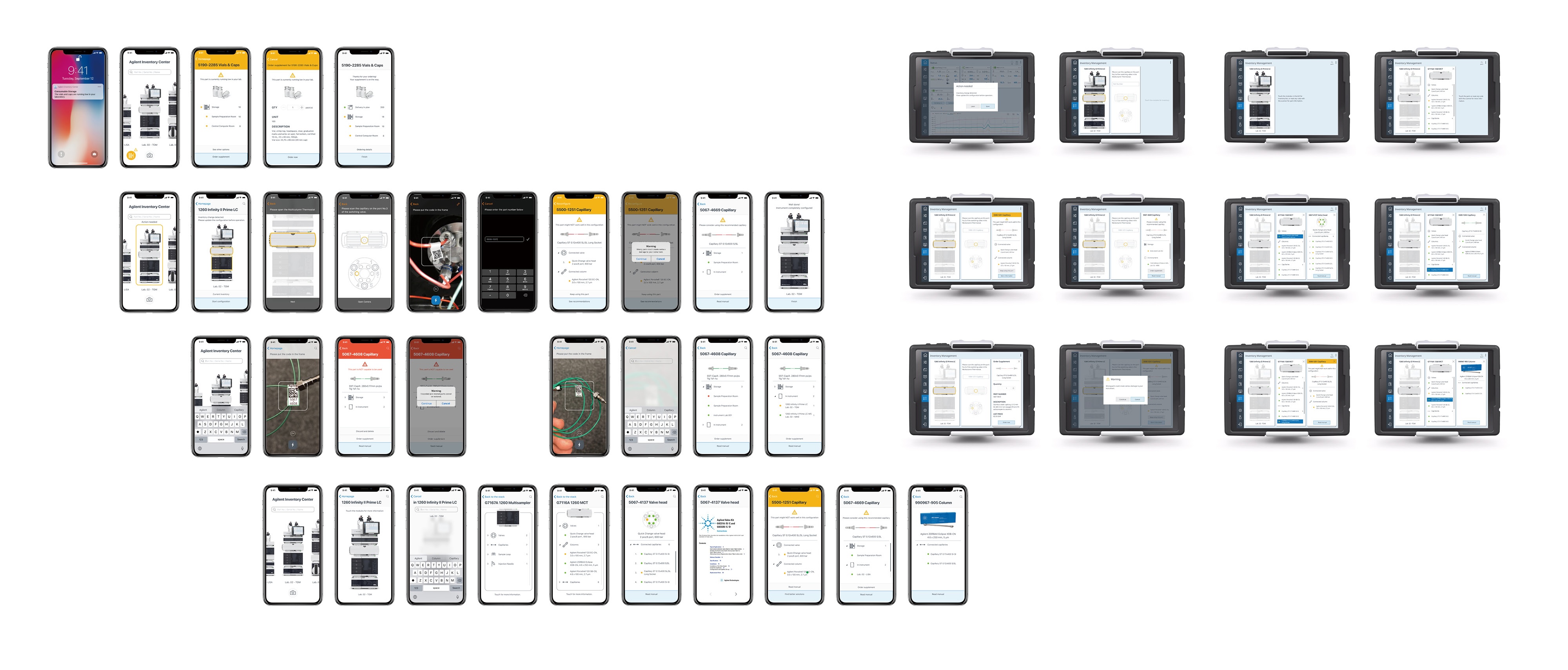
Laboratories run on consumables. Columns, capillaries, vials, septa — small components with outsized consequences. When a critical item runs out mid-analysis, the cost is not just a missing part but lost time, interrupted workflows, and frustrated scientists. This project asked a simple question: what would it look like if managing lab consumables was as effortless as checking your phone?
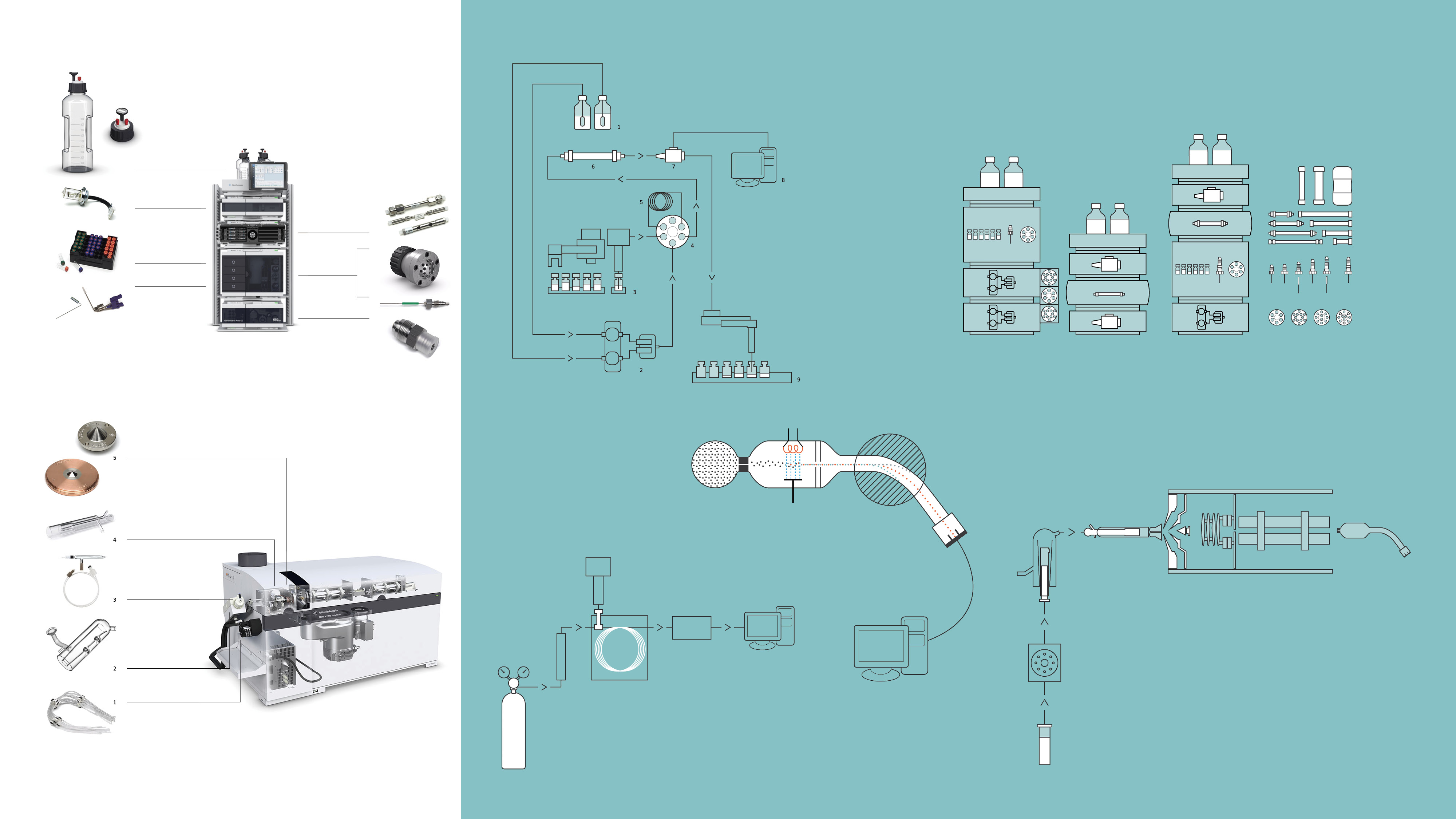
Developed as a Master Thesis in collaboration with Agilent Technologies, the Inventory Management Software is a mobile and tablet application designed for the laboratory environment. Through Internet of Things integration, instruments and consumables report their own status in real time — telling users what they have, what is running low, and what needs to be ordered before it becomes a problem.
The core interaction model is built around four needs: track, what is in the lab and where; manage, quantities, locations, and expiry; reorder, with direct purchasing flow integrated into the routine; and support, with contextual help and troubleshooting tied to specific products and instruments. Each function is accessible from a single interface, designed to work in the conditions of real lab use — gloved hands, divided attention, time pressure.
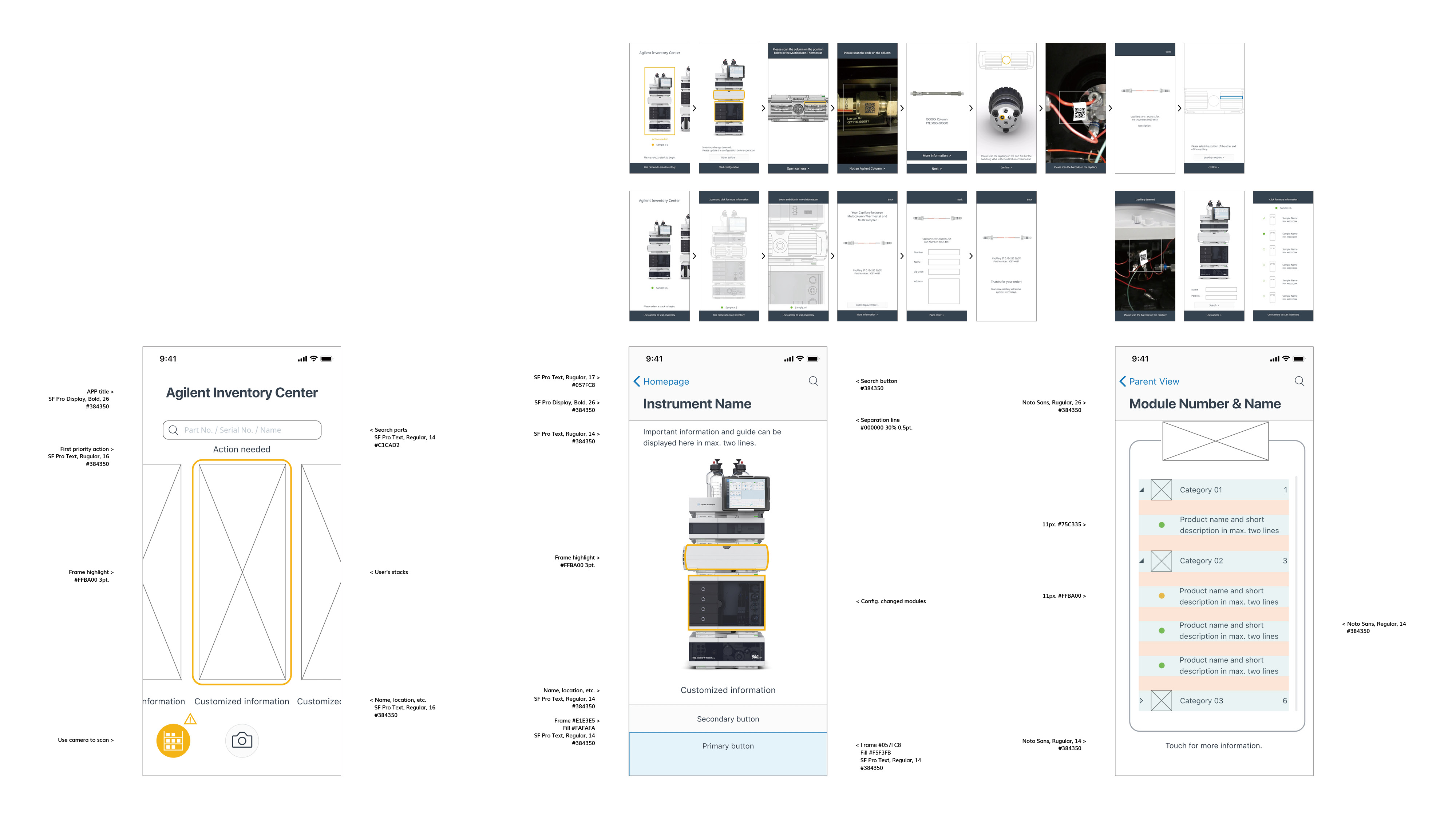
The design language reflects Agilent's precision-instrument heritage while adapting to the logic of mobile interaction — clear hierarchy, generous touch targets, and a visual system that communicates urgency without causing alarm. An item running low reads differently from an item out of stock, and the interface makes that distinction at a glance.
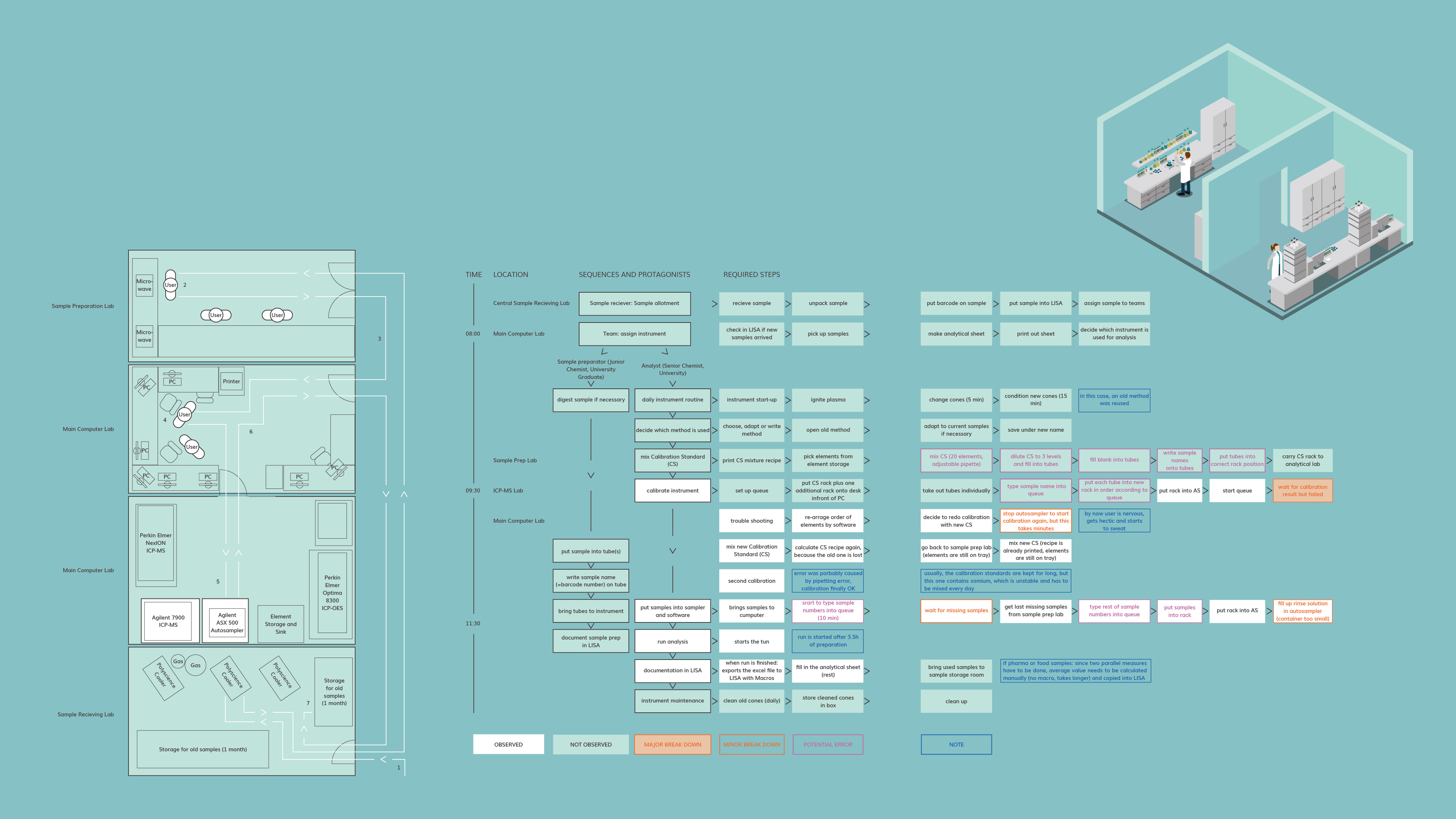
The thesis process moved from ethnographic research in active laboratory settings through iterative prototyping and user testing, arriving at a system validated by the scientists who would use it. The result is an application that fits into existing laboratory routines rather than demanding that those routines change around it.